2026-11-11 · Miguel Torres
Dealing With Flash Flood Water Damage Near The Rio Grande In Laredo
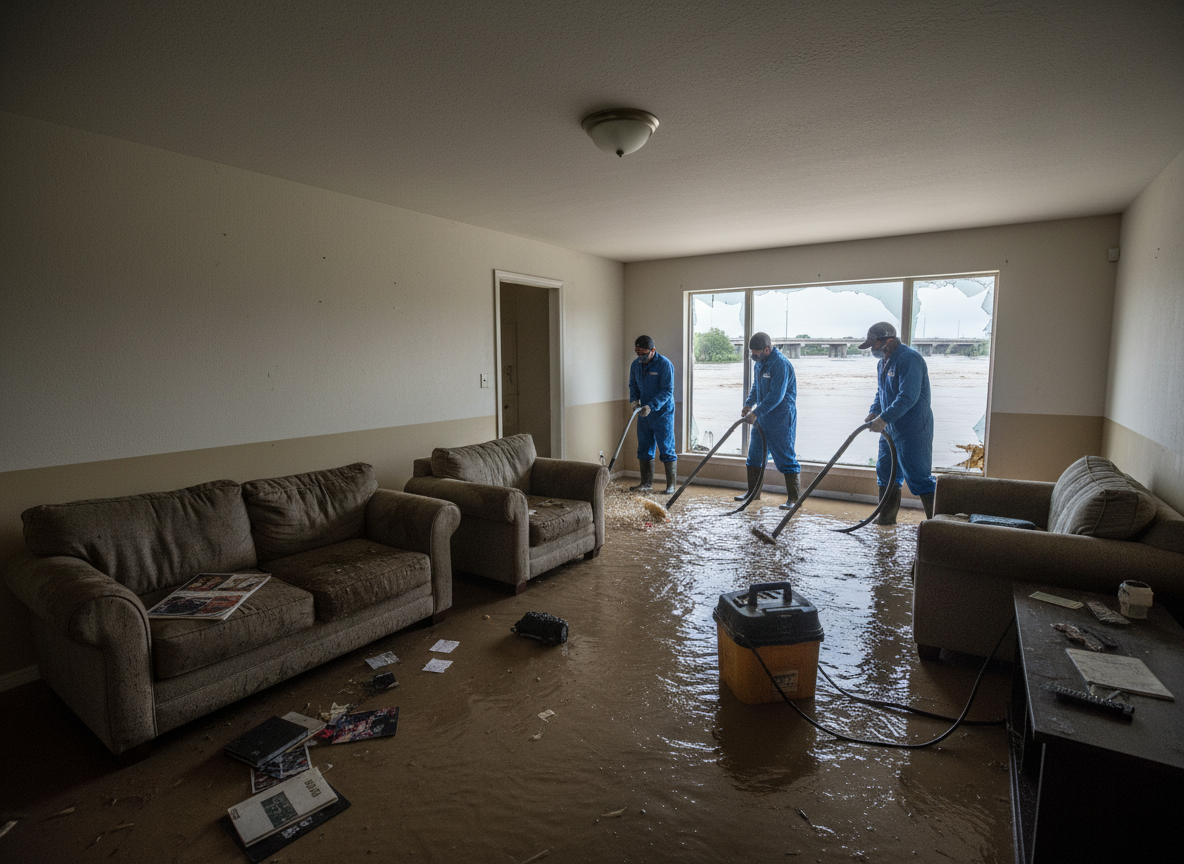
Flash floods near the Rio Grande in Laredo require immediate water extraction within the first 24-48 hours followed by targeted drying to protect wood framing and drywall in homes built before 1980. The hot semi-arid climate with mild winters and sudden summer downpours means water can rise quickly from the river into low-lying blocks of Downtown and Del Mar, saturating slab foundations common in Webb County. Acting fast limits mold growth that thrives once temperatures climb back above 90 degrees.
Assessing Damage in Rio Grande Flood Zones
Older housing stock in Downtown and Hillside often features pier-and-beam construction that traps moisture under floors after Rio Grande overflows. Begin by documenting water lines on walls and checking for hidden saturation in Los Presidentes crawl spaces using moisture meters. Summer storms drop several inches in hours, pushing water from the river into streets that lack modern drainage, so inspect both interior and exterior grading around the foundation. This evaluation guides whether contents can be salvaged or must be removed before mold sets in during the subsequent hot days.
Extraction and Initial Drying Steps
Remove standing water with submersible pumps rated for 50 gallons per minute or higher, then deploy air movers and dehumidifiers sized for the square footage affected. In Del Mar properties, focus airflow under cabinets and behind baseboards where river sediment clings. Run equipment continuously for the first 72 hours while monitoring humidity levels below 50 percent to counter the region's rapid evaporation that can leave salts on surfaces. Document every step with photos for insurance purposes common in Webb County flood claims.
Addressing Hidden Moisture After Flooding
Check behind drywall up to 18 inches above the water line in older Los Presidentes homes where plaster can hide pockets of moisture. How To Spot Hidden Moisture After Plumbing Leaks In Older Laredo Homes explains meter placement that also applies after river flooding. Open wall cavities in affected rooms of Downtown buildings and allow 5-7 days of drying before closing them to avoid trapped dampness that returns during the next hot spell. Proper ventilation prevents the musty odors that develop quickly in the semi-arid heat.
Long-Term Restoration and Prevention
Once surfaces test dry, replace saturated insulation and treat framing with antimicrobial solutions suited to the local soil conditions. Water Damage Restoration crews familiar with Webb County properties reinstall materials using moisture-resistant drywall in flood-prone zones. Improve drainage by regrading yards away from foundations in Hillside neighborhoods and consider French drains where Rio Grande backflow has occurred before. Regular checks after storms keep future damage minimal in these older blocks.
Working With Local Conditions Year-Round
Mild winters allow restoration work to continue without freeze concerns, yet hot summers accelerate mold if drying lags. Residents near San Agustin Plaza or the Republic of the Rio Grande Museum often face repeated events, so maintaining records of past floods helps predict which rooms need extra attention. Nearby cities like Mission and McAllen share similar river-influenced patterns, making regional experience valuable for consistent results across the area.